Sleep science and mattress materials
How Organic Latex Layers Affect Airflow and Temperature Through the Night
Organic latex is known for its buoyant, responsive feel, but the temperature of a bed is shaped by more than its core material. The cover, layer arrangement, surface design, bedding, and bedroom climate all influence how heat and moisture move around a sleeper.
A sleep surface is a layered landscape
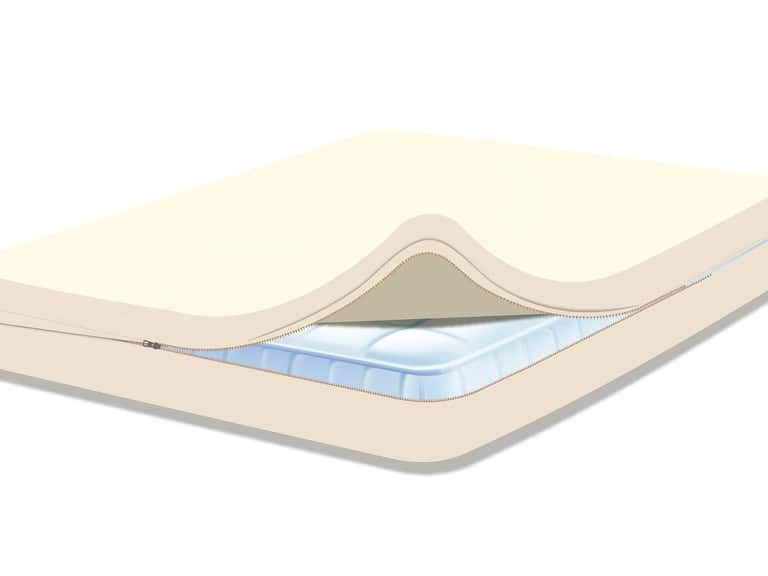
A mattress can look like a single object, yet it behaves more like a small terrain of materials. A sleeper meets the sheet first, then a protector or pad, a cover, and perhaps one or more comfort layers before reaching the mattress core. Each layer changes how air travels, how moisture is managed, and how readily heat can escape.
That is why the words organic latex do not, by themselves, predict whether a bed will feel cool. Latex may be responsive and resilient, but the experience depends on the construction surrounding it. A thick, close-fitting cover can influence airflow differently from a lighter knit. A dense comfort layer may feel different from a thinner layer over a more open support structure. Even the sheet and protector can alter the sensation at the surface.
When comparing organic latex mattresses, it helps to think in terms of the whole assembly rather than searching for one magic cooling material. The goal is not to assume that a mattress will control body temperature on its own. It is to understand how its parts may contribute to comfort—and how your bedding and room conditions complete the picture.
What airflow means in a mattress
Airflow describes the movement of air through or around a material. In a bed, it is only one part of temperature comfort. Heat can also move through direct contact with materials, and moisture can accumulate or disperse depending on the fabrics, fill, and room environment.
Some latex layers are manufactured with perforations or shaped channels. These openings may provide pathways for air within the layer, but their effect depends on the full design: the size and spacing of the openings, the layer’s thickness, the materials above and below it, and how the mattress sits on its base. A perforated layer beneath a dense, less permeable stack of materials may not feel like an open surface. Conversely, a well-considered combination of cover and comfort layers may help the bed feel less enclosed.
Air can also move around the mattress. A breathable bed base, suitable clearance beneath the mattress, and a room that is not overly humid can all contribute to a sleep environment that feels more comfortable. Air movement does not mean that a mattress is actively cooling the body; rather, it describes one route by which warm, moist air may be exchanged with the surrounding environment.
There is no single airflow figure that captures the way every sleeper will experience a mattress. Product descriptions may use terms such as open-cell, ventilated, or breathable, but those words should be read as descriptions of design—not guarantees of a particular nighttime temperature.
How latex construction shapes the feel
Latex is an elastic material that compresses under weight and returns toward its original form when the pressure eases. That springy response can make movement across the surface feel relatively easy. It is distinct from the sensation of sinking deeply into a slow-recovering material, although the overall feel of any mattress depends on its complete layer arrangement and firmness.
Latex layers may differ in thickness, firmness, density, and processing method. Those characteristics influence pressure response and support, and they can also affect how a bed feels against the body. A thicker comfort layer places more material between the sleeper and the support core. A firmer or thinner arrangement may feel more immediate and less enveloping. Neither configuration is automatically cooler: personal comfort depends on fit, body shape, sleep position, bedding, and sensitivity to warmth.
Some designs use a single latex layer, while others combine multiple latex layers or pair latex with other materials. The layers can be arranged to create different combinations of cushioning and support. When assessing latex breathability, look for a clear description of the entire build rather than a headline about one component. Ask what the cover is made from, whether the latex is shaped or perforated, how thick each layer is, and whether additional materials sit above or below it.
The term “organic” concerns material sourcing and certification claims; it does not describe a mattress’s thermal performance. A product can use certified organic materials and still feel warm to a particular sleeper. Likewise, a mattress may feel comfortable in one bedroom and less comfortable in another. Material credentials and temperature experience answer different questions, so it is useful to evaluate them separately.
The cover and the layers above latex
The cover is the first part of the mattress itself that the body encounters, and its construction can noticeably influence the initial feel. A knit cover may stretch and move with the sleeper; a more structured fabric may feel smoother or firmer. Quilting and padding add another layer between the body and the latex beneath. These details matter because they can change how quickly the surface seems to respond and how warm it feels in contact with skin.
Bedding adds further variables. Sheets made from different fibers and weaves can feel crisp, smooth, or brushed, and their weight and fit influence how much air circulates near the body. A thick comforter can hold more warmth than a light blanket. A mattress protector may also alter the surface sensation, especially if it uses a waterproof layer. Waterproof construction can serve an important protective purpose, but it is worth checking what the barrier is made from and how the finished protector feels beneath a sheet.
Layering need not be complicated. A useful starting point is to keep the sleep surface simple: a fitted sheet, a protector suited to your needs, and bedding appropriate to the room and season. If the bed feels too warm, changing a heavy top layer or evaluating a protector may be a more direct first step than assuming the latex core is the only cause.
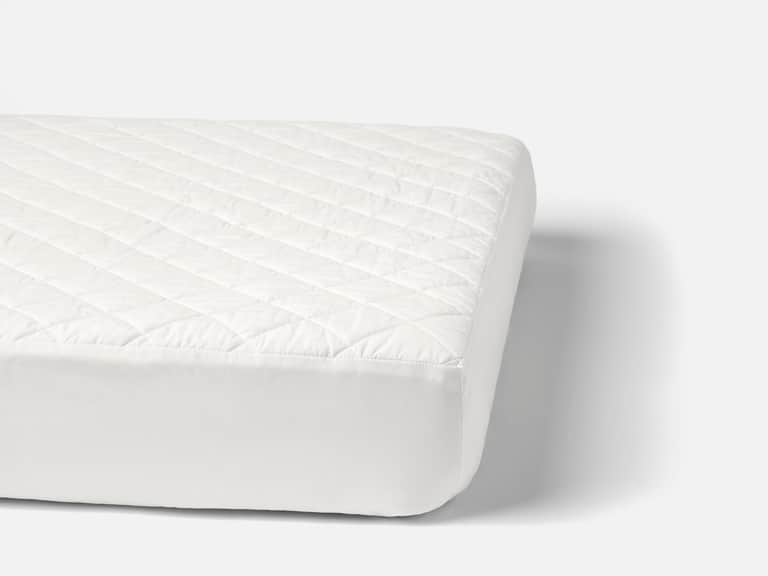
For example, the [Organic Cotton Stretch Knit Mattress Protector](/products/suite-sleep-organic-cotton-knit-mattress-protector-576) is described as a fitted, stretch-knit layer made from GOTS-certified organic cotton, without a waterproof barrier in its listed construction. Its material and design may be relevant to someone considering the feel of layers above a mattress, though individual temperature comfort varies and product descriptions cannot promise a cooler night.
Temperature comfort is personal
People do not experience warmth in exactly the same way. Sleep clothing, bedding preferences, room temperature, humidity, activity, and individual physiology all contribute to how a night feels. A partner sharing the same mattress may have a different comfort threshold. For some sleepers, the main issue is warmth at the surface; for others, the room or duvet is the more significant factor.
Sleep itself also unfolds across changing conditions. A person may settle under covers feeling cool, then feel warmer later in the night as the bedding and mattress environment respond to body heat. Small changes in how much of the body is covered can alter comfort. A mattress is one part of this exchange, not an independent temperature-control system.
For that reason, broad claims such as “sleeps cool” are best treated as shorthand rather than a universal outcome. A more useful description explains the design: the cover fabric, the presence or absence of quilting, the layer materials, and any ventilation features. Those details allow readers to compare construction, while leaving room for individual differences.
If warmth is disrupting sleep regularly, consider the broader sleep environment. Check whether the bedroom is stuffy or humid, whether bedding is heavier than needed, and whether the mattress protector changes the surface feel. If temperature changes are new, persistent, or accompanied by other symptoms, a healthcare professional can help assess possible health-related causes.
What to compare in organic latex mattresses
When evaluating natural latex organic mattresses, a structured comparison is more informative than relying on a single phrase in a product description. Begin with the layer map: what is the cover, what lies immediately beneath it, and what forms the support core? Then consider how those materials work together.
- Layer sequence: Identify the order and thickness of comfort, transition, and support layers.
- Latex design: Check whether the latex is solid, perforated, or shaped with channels, and avoid assuming that openings alone determine the feel.
- Cover construction: Look for the fabric type, any quilting or padding, and whether the cover is removable or fixed.
- Protective layers: Note whether a mattress pad or protector adds waterproofing, extra loft, or another fabric layer.
- Foundation: Confirm that the base is compatible with the mattress and allows the support structure to function as intended.
- Care and use: Review cleaning, rotation, and ventilation guidance from the manufacturer.
- Material claims: Distinguish certification and sourcing information from claims about comfort or temperature.
A well-described construction is especially useful when comparing two mattresses that both use organic latex. One may have a thin, lightly quilted surface and a ventilated layer; another may combine several layers beneath a more substantial cover. Neither should be assumed to suit every sleeper. The details give you a reasoned basis for questions and, where possible, an in-person trial or a careful review of the retailer’s return terms.
A note on infant sleep surfaces
Choosing a mattress for an infant is a different task from choosing an adult bed. Comfort preferences and cooling claims must not take priority over safety. Follow current pediatric safe-sleep guidance and the crib and mattress manufacturers’ instructions. Use a firm, flat sleep surface that fits the crib correctly, and keep the sleep space free of loose bedding and soft objects.
Do not add a topper or extra pad to a crib mattress unless it is specifically permitted by the mattress and crib instructions and consistent with current safety guidance. A material’s natural or organic status does not, on its own, establish that a sleep setup is safe for an infant. Caregivers should consult a pediatric healthcare professional or an authoritative public-health source when they have questions about safe sleep.
For adult bedding and household maintenance, washable layers can help protect a mattress from everyday spills and body oils. The [Organic Crib Mattress Pad](/products/organic-crib-mattress-pad-3795), for instance, is described as a washable, GOTS-certified organic cotton layer intended for a crib mattress. Its listed role is mattress protection; it should not be treated as a temperature-control product or used in a way that conflicts with crib-safety guidance.
Small changes can clarify the source of warmth
If a bed feels too warm, changing several things at once makes it difficult to know what helped. A gradual approach offers a clearer picture. Begin with bedding: try a lighter blanket or a different sheet weight while keeping the mattress unchanged. If the sensation persists, assess the protector and any padded layer. Then consider room ventilation, humidity, and the mattress construction.
Keep brief notes for a week or two. Record the approximate room conditions, bedding used, and whether the warmth occurs at the start of the night or later. The purpose is not to turn sleep into a laboratory experiment; it is to notice patterns that can guide a practical adjustment. Seasonal shifts may matter, as can changes in heating, air conditioning, or the number of people and pets sharing the bed.
Mattress care instructions also deserve attention. Some natural materials should be spot-cleaned rather than soaked, and certain covers are not designed for machine washing. Proper care helps preserve the materials and may prevent trapped moisture from lingering. Follow the manufacturer’s guidance rather than applying a generic cleaning method to every latex mattress.
Common claims, considered carefully
“Natural latex always sleeps cool.” No material guarantees a cool experience for every sleeper. Latex construction, cover, bedding, room climate, and personal comfort all play a part.
“More holes always mean more airflow.” Perforations can create pathways within a layer, but the complete mattress stack and surrounding bedding affect how much that design matters in use.
“Organic certification means better temperature regulation.” Certification addresses defined material or production criteria. It is not a direct measure of overnight temperature comfort.
“A breathable mattress solves a warm bedroom.” A mattress cannot replace appropriate room conditions or bedding choices. It is one element of a larger sleep environment.
Careful language helps separate what a construction feature may do from what a sleeper is guaranteed to feel. The most trustworthy comparison describes the materials and arrangement, acknowledges uncertainty, and avoids treating a single feature as a substitute for the whole design.
A practical checklist for the showroom or product page
Before deciding among organic latex mattresses, gather enough detail to compare like with like. A short checklist can keep the process grounded:
- What materials make up the cover and any quilted surface layer?
- How many layers are present, and what are their approximate thicknesses?
- Is the latex perforated or otherwise shaped, and how is it positioned in the mattress?
- Are other materials included that may affect surface feel or heat retention?
- What type of protector and sheets are recommended or compatible?
- Does the mattress require a particular foundation or spacing beneath it?
- What are the trial, return, and care terms?
- Are organic and other material claims supported by clearly identified certifications?
If testing a mattress in person, allow enough time to settle into your usual sleep position. A brief sit on the edge or press of the hand cannot reproduce a full night’s experience. When an in-home trial is available, use familiar bedding and note how the mattress feels over several nights, while remembering that temperature and comfort can change with the season.
The broader picture of sleep temperature
Temperature comfort is part of a larger sleep environment that includes light, noise, routines, and physical comfort. Mattress shopping can become focused on technical language, but everyday conditions often offer the clearest clues. A room that feels stuffy, a heavy duvet, or a protector that changes the surface sensation may matter as much as the composition of the core.
That perspective does not diminish the value of thoughtful mattress design. A responsive latex layer, a considered cover, and a suitable base can all contribute to a sleep surface that feels supportive and comfortable. It simply places each feature in context. A mattress is not a climate-control device, and no label can promise an identical night for every body.
When reading about latex breathability, look for specific construction details, compare the entire layer arrangement, and separate material certifications from performance claims. Then consider the bedding and room that will surround the mattress. This approach helps set realistic expectations and makes a choice more closely matched to the sleeper rather than to a slogan.
The takeaway
Organic latex can be part of a comfortable, responsive sleep surface, but overnight warmth depends on more than the latex itself. Processing, layer thickness, perforation, cover fabric, protectors, sheets, room conditions, and personal preferences all influence the experience. Compare the complete design, make changes methodically if warmth is a concern, and treat “breathable” as a useful construction clue—not a guarantee of a cool night.