Mattress Materials & Sleep Surfaces
What Defines a Luxury Natural Latex Sleep Surface?
A premium label tells only part of the story. The character of a natural latex mattress comes from what its materials are, how its layers are built, how the surface feels under pressure, and how well its construction holds up with use.
Published October 11, 2026
There is a particular quiet to a well-made bed: the give beneath a shoulder, the ease of turning, the way the surface seems to answer movement without swallowing it. In a natural latex mattress, that sensation is shaped by a material with a distinctive, buoyant response. But “luxury” is not a technical specification, and the words on a label cannot tell you whether a mattress will suit your body, room, or habits.
A thoughtful assessment looks past adjectives and into the layers. What kind of latex is used? How thick are the layers, and what firmness do they provide? What surrounds the core? Are materials and certifications clearly disclosed? Can the mattress be maintained or adjusted over time? These details offer a more useful map than price or presentation alone.
This guide explains how to compare natural latex sleep surfaces in practical terms. It does not treat one construction as ideal for everyone. Instead, it offers a framework for understanding materials, comfort, support, durability, care, and the claims that deserve closer inspection.
First, understand what “natural latex” means
Latex used in mattresses is made from rubber, commonly derived from the milky sap of rubber trees. The sap is processed into a resilient foam-like material. Depending on the manufacturing method and formulation, latex can differ in feel, density, airflow, and resilience. The word “natural,” however, should prompt a closer look rather than end the inquiry.
Mattress labels may use terms such as natural latex, organic latex, or blended latex. Those descriptions are not interchangeable. A product may contain latex alongside other materials, and a phrase such as “natural” does not by itself establish that every component is organic or that the complete mattress has been independently certified. Request a clear breakdown of the latex layers and other major materials.
Two familiar production methods are Dunlop and Talalay. They refer to different manufacturing processes, not simple grades from inferior to superior. Dunlop latex is often described as having a denser, more grounded feel, while Talalay latex may feel more uniform and springy. Those are general tendencies, not guarantees: formulation, density, thickness, and the layers above and below all influence the final sensation.
For a buyer, the useful question is not simply “Which method is best?” It is “What is this layer designed to do, and how does it contribute to the whole mattress?” A comfort layer might provide cushioning and pressure relief; a deeper layer might contribute more substantial support. Product documentation should make the composition and intended construction understandable.
Construction: a surface is a system of layers
A mattress can be thought of as a small landscape of materials. The upper surface meets the body, deeper layers distribute weight, and the base supports the structure. In a latex mattress, the balance among these layers shapes how readily the bed yields, how quickly it responds when weight shifts, and whether sleepers feel supported across different parts of the body.
Layer thickness matters because a thin comfort layer can feel quite different from a deeper one, even when the material is similar. Firmness and density also matter, but they describe different properties. Firmness is commonly used to describe how soft or firm a surface feels. Density relates to the amount of material in a given volume and can be one clue about construction, though it does not independently prove quality or durability.
Some designs use a single latex core; others combine multiple latex layers with different firmnesses. Layered constructions may allow more variation in pressure relief and support, and some designs make it possible to rearrange or replace layers. That flexibility can be useful, but only if the details are clear: which layer goes where, whether the layers are interchangeable, and what replacement or repair options exist.
Edge support is another part of the structure worth examining. Ask how the mattress behaves when sitting or sleeping near the perimeter, and whether the edge uses a distinct support material or simply the same core. A strong edge may make it easier to use the full sleep surface, but it is not a universal measure of comfort. The mattress should be assessed as a whole, including its fit on the intended foundation.
Comfort, pressure relief, and body response
Latex is known for an elastic, responsive feel. Rather than slowly molding around the body in the same way some memory foams do, it tends to recover its shape quickly after pressure shifts. Some sleepers appreciate this buoyancy because changing positions can feel less effortful. Others prefer a slower, more enveloping surface. Neither preference is a measure of quality; it is a matter of fit.
Pressure relief depends on the interaction between the sleeper and the entire sleep system. Body shape, sleeping position, weight distribution, the mattress firmness, the thickness of the comfort layer, and even the foundation beneath the bed can affect the result. A surface that feels supportive to one person may create pressure at the shoulder or hip for another.
Side sleepers often need enough give at the shoulder and hip to reduce concentrated pressure while keeping the body from sinking excessively. Back sleepers may prefer a surface that supports the natural contours of the body without creating an uncomfortable gap or an overly firm contact point. Stomach sleepers commonly need a surface that limits excessive sinking through the midsection. These are starting points for evaluation, not medical rules or guarantees.
When testing a mattress, allow time for the body to settle rather than judging it from a quick sit. Lie in the position you normally use, notice pressure points, and pay attention to how easy it is to shift. If two people share the bed, test the surface together when possible. Consider a retailer’s trial and return terms before purchase, since brief showroom testing cannot reproduce an entire night of sleep.
Airflow and temperature are about the whole bed
Latex’s open structure can permit air movement through the material, but no mattress material alone determines whether someone sleeps cool. The cover, quilting, protector, sheets, room temperature, humidity, clothing, and individual physiology all contribute to the sleep climate. Thick or tightly woven layers above a mattress may change how its surface feels and how heat and moisture move.
Look for specific descriptions of the cover and any quilting or padding. Natural fibers such as cotton or wool may be used in covers, but the presence of a natural fiber is not proof that the entire product is organic, chemical-free, or appropriate for every sleeper. Likewise, broad claims such as “temperature regulating” should be treated as a description to investigate, not a promise of a particular overnight result.
Practical testing is valuable. If possible, assess the mattress with the protector and bedding you plan to use. Confirm that the protector fits the mattress depth and does not introduce a surface feel you dislike. A sleep surface is a layered environment; the materials between the body and the latex matter.
Certifications and material disclosures
Certifications can help verify defined aspects of a product, but they should be read carefully. A certificate may apply to a specific material, a manufacturing process, or a finished item. It does not automatically establish every claim made about the mattress. Ask what entity issued the certification, which component it covers, and whether the documentation is current and traceable to the product being considered.
Terms such as “organic,” “low emissions,” and “non-toxic” can refer to different standards or marketing claims. Look for the named certification and its scope rather than relying on a badge or an unqualified statement. If the seller provides a materials list, check whether it accounts for the core, cover, adhesives, fire-barrier components, and other significant parts of the construction.
People with latex allergies should take particular care. A mattress described as natural latex is not automatically safe for someone with a latex allergy. Exposure risks and sensitivities can vary, and product construction may include covers or other components that affect contact. Anyone with a known allergy or medical concern should seek guidance from a qualified healthcare professional and verify the manufacturer’s material disclosures before purchasing.
Durability, care, and the test of time
Natural latex is often selected for resilience, but durability depends on more than the name of the material. Layer thickness and density, the quality of the surrounding fabrics, the foundation, the load placed on the mattress, and the way it is maintained can all influence its service life. A premium price does not guarantee that a mattress will remain comfortable for a particular number of years.
Read the care instructions before buying. Some mattresses have removable covers; others require spot cleaning and careful airing. A removable cover is not necessarily machine washable, and latex components generally should not be assumed to be washable. Avoid exposing materials to direct heat or sunlight unless the manufacturer explicitly permits it. For spills, follow the stated instructions promptly, since moisture trapped in a mattress can create problems beyond visible staining.
Use a supportive base that meets the mattress maker’s requirements. A slatted foundation may need limits on spacing, while a platform base may need to provide adequate structural support and ventilation. The wrong foundation can affect performance and may influence warranty coverage. Check whether the mattress should be rotated, whether it is designed to be flipped, and how its weight affects moving or handling.
Warranty language deserves a careful read. Note the length of coverage, what counts as a defect, whether body impressions are addressed, and what responsibilities fall to the owner. A warranty is not a prediction of comfort or a promise that every change in feel will qualify for repair. Trial periods, return costs, delivery arrangements, and disposal policies are separate terms that can matter just as much.
A practical comparison checklist
Comparing mattresses becomes easier when every candidate is assessed using the same questions. A concise record can keep descriptions grounded in facts rather than memory or showroom impressions.
- Material: What is the latex composition, and are other foams, fibers, adhesives, or barriers present?
- Layer design: How many layers are used, what are their thicknesses, and what role does each play?
- Feel: What firmness options are available, and can the mattress be tested in a realistic sleeping position?
- Cover: What fibers and quilting are used, and what are the cleaning instructions?
- Documentation: Are certifications named and clearly tied to particular materials or the finished product?
- Foundation: What base is recommended, and are there limits on slat spacing or support?
- Ownership: Can layers be replaced or rearranged? What are the delivery, trial, return, and warranty terms?
- Fit: Does the mattress suit the sleeper’s position, comfort preferences, room, and practical handling needs?
When a detail is missing, ask for it in writing. A transparent answer is more useful than a phrase such as “premium materials” without specifications. If information remains unavailable, treat that uncertainty as part of the comparison.
Natural latex compared with other mattress materials
A natural latex mattress guide should help readers compare materials without turning the decision into a contest. Memory foam commonly offers a more contouring, slower-response sensation; latex usually feels springier and recovers shape more quickly. Innerspring mattresses use coils as a central support system, sometimes combined with foam or fiber comfort layers. Hybrid designs pair coils with upper comfort materials, which may include latex.
Each construction has trade-offs in feel, motion transfer, ease of movement, temperature, weight, and care. Even two mattresses described with the same broad material label can differ substantially because their thicknesses, densities, covers, and support systems are not alike. The meaningful comparison is between complete constructions, not isolated buzzwords.
It is also useful to distinguish an all-latex mattress from a mattress that contains a latex comfort layer over another type of core. Both may offer a latex feel near the surface, yet they are not the same construction. Ask for a layer-by-layer description, especially when evaluating a product described as a luxury natural mattress.
When a topper may be the more direct solution
Not every comfort concern calls for replacing a mattress. A topper can adjust the feel of an existing bed, although it cannot repair a sagging or structurally damaged core. Before buying one, identify the problem: Is the surface too firm, too warm, uneven, or simply lacking cushioning? A topper may help with some surface-feel concerns, but it will not necessarily correct poor support.
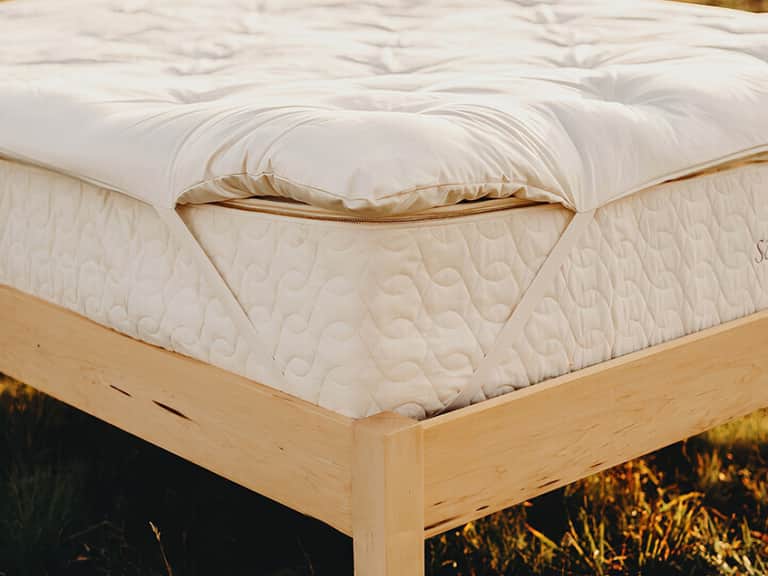
Materials matter here, too. A wool topper, for example, is different from a latex layer: it adds cushioning and manages moisture in a way that produces a distinct feel. The Savvy Rest Natural Savvy Woolsy Mattress Topper is described as a natural wool layer in an organic cotton sateen casing, with corner straps and a total height of approximately three inches. Its materials and purpose make it an example of a comfort layer, not a natural latex mattress. That distinction is useful when comparing sleep surfaces: a topper can change the bed’s uppermost feel, while the mattress core continues to provide its underlying structure.
Check the topper’s fit, care instructions, and compatibility with your existing mattress. A mattress pad or protector can also change the way a surface feels, though its primary role may be protection rather than substantial cushioning. Compare each layer by function instead of grouping all bedding accessories under a single “comfort” label.
How to recognize luxury beyond the label
Luxury, in practical terms, is the meeting of considered materials, clear construction, suitable comfort, and dependable ownership. Some sleepers value a carefully documented material supply chain; others prioritize a responsive feel, adjustable layers, or straightforward care. None of those priorities is universal, and the most expensive option is not automatically the most suitable.
Look for precision rather than grand language: complete material disclosures, understandable layer specifications, realistic care guidance, accessible certification details, and terms that explain what happens after delivery. A brand’s ability to answer ordinary questions is part of the product experience. So is the mattress’s weight, the ease of rotating or moving it, and the availability of replacement components.
Finally, give comfort the final word. Research and documentation can narrow the field, but they cannot predict every sleeper’s response. A mattress is a personal environment encountered for hours at a time. Testing it, understanding the trial terms, and matching its construction to your own preferences are essential steps.
The clearest path to a confident choice
A luxury natural latex sleep surface is defined less by a single material claim than by the coherence of its design. The latex should be described clearly; the layers should have understandable functions; the cover, foundation requirements, and care instructions should be disclosed; and certifications should be specific enough to verify. Comfort and support must then be judged in the context of the person who will sleep on it.
Approach the decision like an attentive observer: examine the details, separate evidence from advertising, and notice how the surface responds to your body. The result need not be the most elaborate mattress or the one with the longest list of features. It should be the sleep surface whose materials, construction, feel, and practical demands make sense together.