Sleep Science & Mattress Guides
Choosing Organic Latex: Firmness, Feel, and Fit Explained
Organic latex can feel buoyant, gently contouring, or distinctly firm, depending on how it is made and what surrounds it. Understanding firmness, construction, and your own sleep preferences is more useful than relying on a material label alone.
Published November 11, 2026
At night, a mattress is less like a static piece of furniture than a small landscape beneath the body. Shoulders and hips press into it; the spine settles into alignment—or struggles to find it. When people consider organic latex, they are often looking for a sleep surface that feels responsive, uses materials they understand, and offers dependable support. Yet “organic latex” does not describe one uniform sensation. Firmness, thickness, the layers around the latex, and the sleeper’s own proportions all shape the experience.
That distinction matters whether you are choosing a complete mattress or considering a latex layer to adjust an existing bed. A label may tell you something about ingredients or certification, but it cannot predict exactly how the surface will feel beneath your body. The more useful approach is to ask how the latex is constructed, how much cushioning you want, what position you sleep in, and whether your current mattress already provides a stable foundation.
What “organic latex” tells you—and what it doesn’t
Latex is made from rubber, which can be produced using natural rubber tapped from trees, synthetic materials, or a blend. Organic latex refers to natural latex produced within specified organic standards. A certification can help verify claims about particular materials and processes, but it should not be treated as a shortcut for judging comfort. Certification and firmness answer different questions.
When comparing organic latex mattresses or toppers, look for specific information: the source and type of latex, whether it is certified, the thickness of each layer, the stated firmness, and the materials used in the cover and any surrounding layers. The term “natural latex” alone does not necessarily establish that a product is certified organic. Likewise, a product made with certified organic latex may include other materials that have their own distinct composition and certifications.
Some products use latex in a single core; others combine it with wool, cotton, or additional support layers. The result can change both surface feel and temperature behavior. A thick wool layer, for example, may make a topper feel plusher than its latex component alone would suggest. Covers also matter: a taut, tightly fitted cover can create a more structured feel, while a flexible knit may allow the latex to respond more freely.
Firmness is a sensation, not a universal number
Firmness is often described on a scale, but those numbers are not necessarily standardized across brands. One company’s medium may feel firmer than another’s. The sensation also varies with body weight and shape: a lighter sleeper may not compress a layer as much as a heavier sleeper, while a person with prominent shoulders or hips may notice pressure in places another sleeper does not.
It helps to separate surface softness from underlying support. A mattress can have a cushioned top and a stable core, or it can feel firm at the surface while still allowing the body to settle into the support layers. A soft topper can change the first impression of a bed, but it cannot correct every problem underneath. If a mattress is sagging or uneven, adding a comfort layer may simply soften the same unsupported area.
Latex is often described as responsive because it pushes back as the body moves, rather than slowly taking shape and recovering. That liveliness can make repositioning feel easier for some people. It does not mean every latex layer feels springy in the same way: density, firmness, thickness, quilting, and the mattress beneath it all influence the final result.
Start with sleep position and pressure points
Sleep position offers a helpful starting point, not a rigid rule. The goal is to balance pressure relief with a reasonably aligned, comfortable posture. A mattress that feels right to one sleeper may not work for a partner with a different position, body type, or sensitivity to pressure.
Side sleepers
Side sleeping concentrates more pressure around the shoulder and hip. If those areas feel compressed or sore, a little more cushioning may help. A softer latex layer or a topper with a plush surrounding material can make the surface more forgiving. But softness is not automatically better: too much sink can make turning difficult or leave the waist and spine without the support they need. The useful question is whether the shoulders and hips can settle comfortably while the rest of the body remains supported.
Back sleepers
Back sleepers often look for a surface that cushions the lower back without allowing the pelvis to sink excessively. A medium or firmer-feeling setup may suit some people, while others prefer a softer top over a supportive core. Pay attention to whether the mattress feels even from shoulder to hip and whether you can relax without consciously bracing your back.
Stomach sleepers
Stomach sleepers may be especially attentive to how much the midsection sinks. A very soft comfort layer can allow the torso to settle more deeply, potentially making the sleeping posture feel strained. A firmer, more level surface may be a better place to begin evaluating options. Individual comfort still varies, so use observed fit rather than position alone to make the decision.
Combination sleepers
If you change positions during the night, responsiveness and ease of movement may matter as much as initial softness. Latex’s buoyant feel can make it easier to shift compared with materials that conform slowly, though the complete mattress construction determines how noticeable that quality will be. Try movements you actually make in bed—rolling from side to back, for instance—and notice whether the surface follows comfortably or resists.
How body type and personal feel change the fit
Two people can lie on the same mattress and describe it differently. Body weight affects how deeply a person compresses the comfort layers. Height and body proportions affect where pressure is concentrated. Previous experience matters, too: someone accustomed to a plush pillow-top may find a responsive latex surface unfamiliar at first, while a person who prefers a stable, buoyant feel may welcome it.
Consider your whole-body impression rather than judging only the first few minutes. Is pressure concentrated at a shoulder or hip? Does the surface feel supportive without creating a rigid, uncomfortable sensation? Can you turn without effort? Do you wake up needing to adjust your position? A brief in-store test or a first night is not a perfect measure, but careful attention to these details is more informative than assuming that a certain firmness description will suit everyone.
When two sleepers share a bed, comfort may be a compromise. Compare preferences and, where available, look into configurations that allow different firmness on each side. Separate comfort layers or split designs can be useful for some couples, but verify that the overall construction remains compatible with the bed frame and fitted bedding.
A mattress or a topper?
A complete latex mattress and a latex topper serve different purposes. A mattress supplies the principal support structure, while a topper changes the feel of the surface above an existing bed. If your mattress is generally level and supportive but feels too firm, a topper may add cushioning. If it is sagging, structurally worn, or causing a persistent sense of uneven support, a topper may not solve the underlying issue.
Thickness affects how much a topper can alter the sensation of the bed, but it is not a simple measure of softness. The materials and construction matter just as much. A topper that combines latex with wool, for example, will not feel identical to a plain latex slab of the same thickness. Check how the layers are assembled, how the topper is secured, and what care instructions apply.
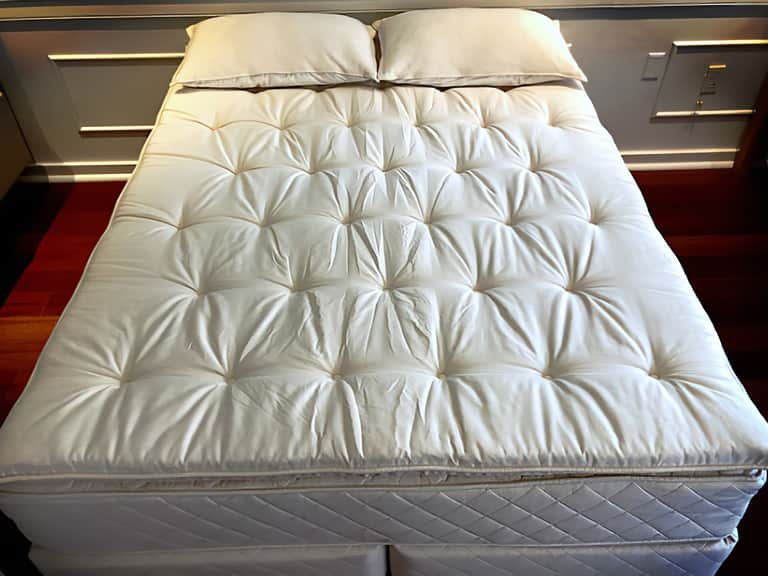
For a modest surface change, the Naturally Organic Hudson Organic Mattress Topper combines a two-inch organic latex layer with organic wool and an organic cotton sateen cover. Its construction is relevant to sleepers considering added cushioning while retaining the mattress they already own. The product information recommends periodic flipping and rotation and specifies spot cleaning rather than machine washing; these details are worth weighing alongside the expected feel.
For a more substantial layered design, the Obasan Grand Organic Wool and Latex Mattress Topper combines 2.25 inches of GOLS-certified organic latex with two inches of organic wool. Its overall thickness and mix of materials may create a different surface experience from a thinner, simpler latex layer. Because a tall topper can significantly change the bed’s profile, check fitted-sheet depth, mattress edges, and the stability of the sleeping surface before choosing one.
Construction questions worth asking
Product descriptions can make it difficult to compare options if they rely mostly on broad terms such as “natural,” “supportive,” or “luxurious.” Ask for details that describe what is actually inside the mattress or topper. Clear answers make it easier to compare products on their real construction rather than on a single headline claim.
- What kind of latex is used? Look for an explicit description of natural, synthetic, or blended latex.
- What does the certification apply to? Check whether the latex, textiles, finished product, or some other component is certified, and identify the certifying standard.
- How thick are the layers? Layer depth helps explain how construction may affect cushioning, support, and the overall profile.
- What is around the latex? Wool, cotton, and cover construction can influence surface feel and care needs.
- How is firmness described? Ask how the maker defines its firmness terms, and remember that scales may not be comparable across brands.
- What base does the product require? A mattress needs an appropriate, stable foundation. Review the maker’s instructions for slats, platforms, ventilation, and weight support.
- How should it be cared for? Spot-cleaning rules, rotation recommendations, and limits on moisture or heat can affect everyday practicality.
- What are the warranty and return terms? Understand the trial period, exclusions, and procedures before purchase, particularly if you are unsure how the feel will suit you.
Certifications: useful evidence, not a comfort score
Certifications can offer a way to verify claims about materials or manufacturing requirements, but each program has a defined scope. A certificate associated with organic latex does not automatically certify every component of a mattress, nor does it indicate whether a bed will be soft, firm, or suitable for a particular sleeper. Read claims precisely and, when possible, verify them with the certifying organization or the product documentation.
It is also useful to distinguish material credentials from health promises. A certification may document compliance with a particular standard; it cannot guarantee that a mattress will prevent pain, improve sleep for every person, or eliminate every possible exposure. Sound product research stays specific: identify what a material is, how the claim is verified, and what remains a matter of individual comfort.
Care and longevity begin with the instructions
Latex bedding can require different care from ordinary sheets and washable protectors. Some toppers should not be soaked or machine washed. Others may need periodic rotation or careful spot cleaning. Before removing covers or treating a stain, consult the manufacturer’s directions: unsuitable heat, moisture, cleaning agents, or direct sunlight can damage materials.
A fitted mattress protector can help shield a sleep surface from everyday spills and wear, but check that its construction does not make the bed feel warmer or stiffer than you prefer. A protector should fit the mattress and any topper securely, without bunching. If you use a thick topper, verify that sheets and protectors have enough depth to accommodate the complete stack.
Support also depends on what lies beneath the mattress. Follow the manufacturer’s guidance for the base, including any requirements about slat spacing or ventilation. A well-chosen latex layer cannot compensate for a frame that is unstable or unsuitable for the mattress. Simple checks—looking for shifting, uneven support, and visible wear—can help you notice when the whole sleep setup needs attention.
A practical checklist before choosing
Before settling on an organic latex mattress or topper, take stock of the bed you already have and the experience you want to change. This short checklist helps turn vague preferences into useful questions:
- Identify what feels wrong now: excessive firmness, too much sink, pressure at a particular point, or difficulty moving.
- Note your usual sleep positions, while allowing for changes through the night.
- Consider body shape and where you tend to notice pressure or a lack of support.
- Decide whether you need a new support system or only a change to the top layer.
- Compare layer thickness, latex type, accompanying materials, and certification details.
- Check mattress dimensions, bed-frame requirements, topper attachment, and sheet depth.
- Read the care instructions, warranty terms, and return policy before committing.
- Evaluate comfort across more than one position and, if possible, over an adequate trial period.
The right fit is a balance
Organic latex offers a broad family of sleep surfaces, not a single promised feel. One construction may provide a springy, firm foundation; another may add a soft, layered cushion. Both the materials and the way they are combined matter, but so do the sleeper’s position, body proportions, and personal response to pressure and movement.
The clearest route to a good choice is to separate the questions. First, verify what the product is made of and what its certifications cover. Then examine its firmness description, thickness, layers, and care requirements. Finally, judge whether it fits your body and sleep habits. A material label can begin the investigation; comfort, support, and practical fit are what complete it.